The work was good. That was never the problem.
By early 2024 I had spent five years in marketing and communications. I was a Marketing and Operations Project Manager at White Walls Media, running the company's social media, marketing and operations day to day, and delivering events across Bhopal, Gurugram, Raipur, Mumbai, Pune and Delhi. I was proud of what I was producing.
The problem was that nothing was moving.
Not down. That is the part that makes it hard to explain. Nothing was going wrong. There was no bad manager, no layoff, no crisis. It was simply constant, month after month, and I could see it staying constant for a very long time.
In February 2024 I decided to leave and start again as a student in a country where I knew nobody. This is the honest accounting of why.
Bhopal, and a degree I never used
I grew up in Bhopal, Madhya Pradesh. My family is originally from Narsinghpur, a small town near Jabalpur, but Bhopal is where I did my schooling, my college, and the first twenty four years of my life. I did not leave until 2019.
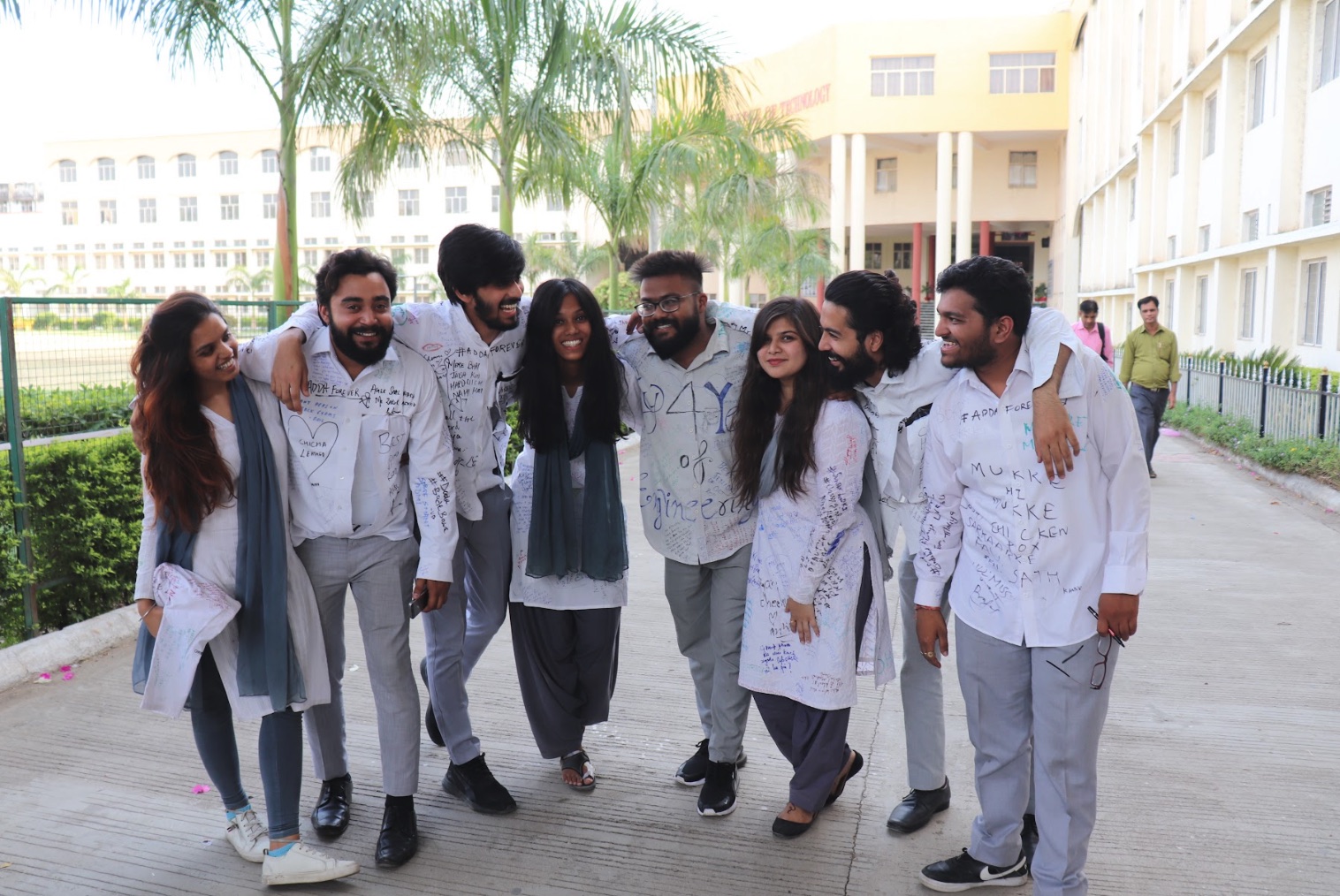
My degree was a Bachelor of Engineering in Information Technology from Oriental College of Technology, 2015 to 2019. Web technologies, database management, systems design.
I did not want to write code. I worked that out fairly early and did not do a great deal about it, which is a normal enough Indian engineering story. What I did instead was be relentlessly social. I knew people across every department, every year, every society. At the time I thought this was a distraction from my degree. It turned out to be the more useful education.
The agency years
In June 2019 I joined DforDelhi as an intern.
I should say plainly that the company was my elder brother Ayush's. The door was opened for me. What happened after I walked through it was mine, and I would rather tell you that at the start than have you find it out later.
DforDelhi is a hyperlocal discovery platform for Delhi, covering food, travel, lifestyle and events, with a following in the hundreds of thousands. Four months in I became a Junior Account Manager, and I stayed until March 2021.
The work sat across two halves. On one side, the client accounts: eight or more at a time, running social strategy, content and community engagement, watching the day to day of each one. On the other, the campaigns themselves, where I was involved from ideation through to the operations of actually delivering the thing. I also handled website content and ecommerce across Shopify and WooCommerce, wrote SEO copy, and built the pitch decks that brought new business in.
Then the pandemic arrived and the whole thing moved into my bedroom.
This is where I actually learned marketing. Not the vocabulary, the mechanics. SEO that had to move a real number rather than fill a report. Influencer collaborations where the negotiation mattered more than the creative. Paid campaigns where I could watch money leave and see precisely what it bought. Production schedules that had to survive contact with reality, and usually did not.
SRF Foundation: the year I was the department
In April 2021 I moved to SRF Foundation as a Communication Consultant.
SRF Foundation is the CSR arm of SRF Limited, a chemicals, packaging films and technical textiles conglomerate. It was established in 1982 and works on education, vocational skills, natural resource management and preventive healthcare across India.
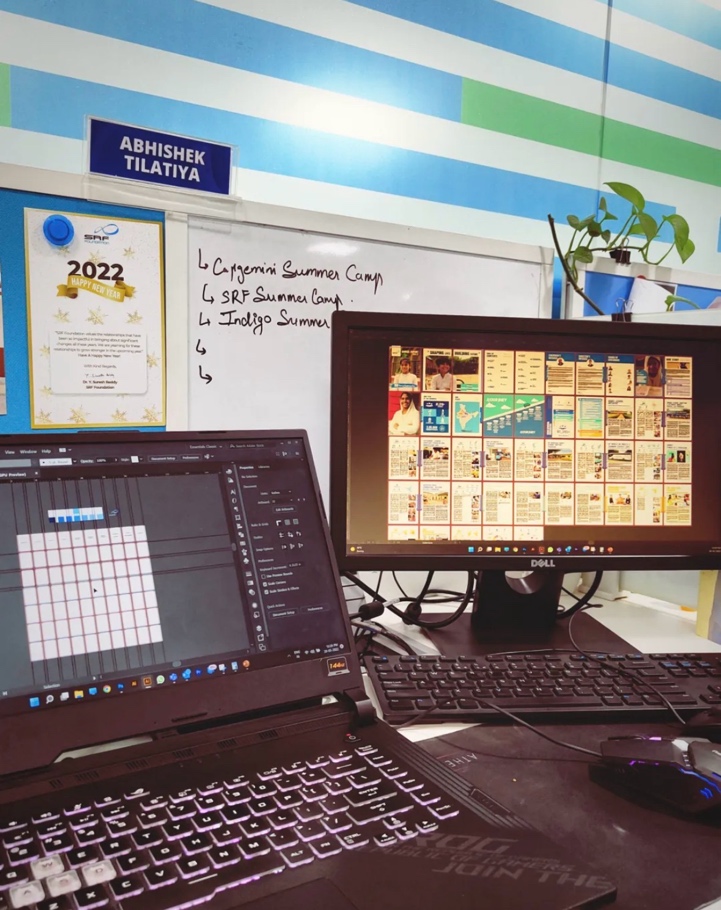
The work was different in kind from agency life. Press releases, media liaison, public-facing communications across fourteen regions, and relationships with government bodies, NGO partners and community stakeholders. My first project was the organisation's annual report, which I worked on with my manager, covering the design and the full communications output, digital and physical.
Four months in, she left.
The honest version of what happened next is less dramatic than people expect. Nothing collapsed, because by then I was already doing most of it. What changed was the title on the work, not the work itself. I ran the communications function on my own for close to a year.
What I had instead of a team was fifteen to sixteen interns, from IIM Indore and colleges across Gurgaon and elsewhere. Very smart people with no context. My job quietly became something other than communications: it became working out how to turn raw intelligence into finished output at pace, without doing it all myself. Eventually I hired someone.
That was the first time I was responsible for anyone else's work. Being competent at a job and being able to get a job done through other people are unrelated skills, and I found that out the slow way.
White Walls Media
In August 2022 I joined White Walls Media as Marketing and Operations Project Manager.
White Walls is an event curation, artist management and film production company founded in 2011 by Karan Kukreja. In 2015 it launched GIFLIF, the Great Indian Film and Literature Festival, which grew from a film and literature festival into a full independent music ecosystem, Indiestaan.
Most of the job was the steady work: running the company's own social media, marketing and operations, week after week. On top of that sat the events. Three large ones during my time there, and a long tail of smaller ones, across Bhopal, Gurugram, Raipur, Mumbai, Pune and Delhi.
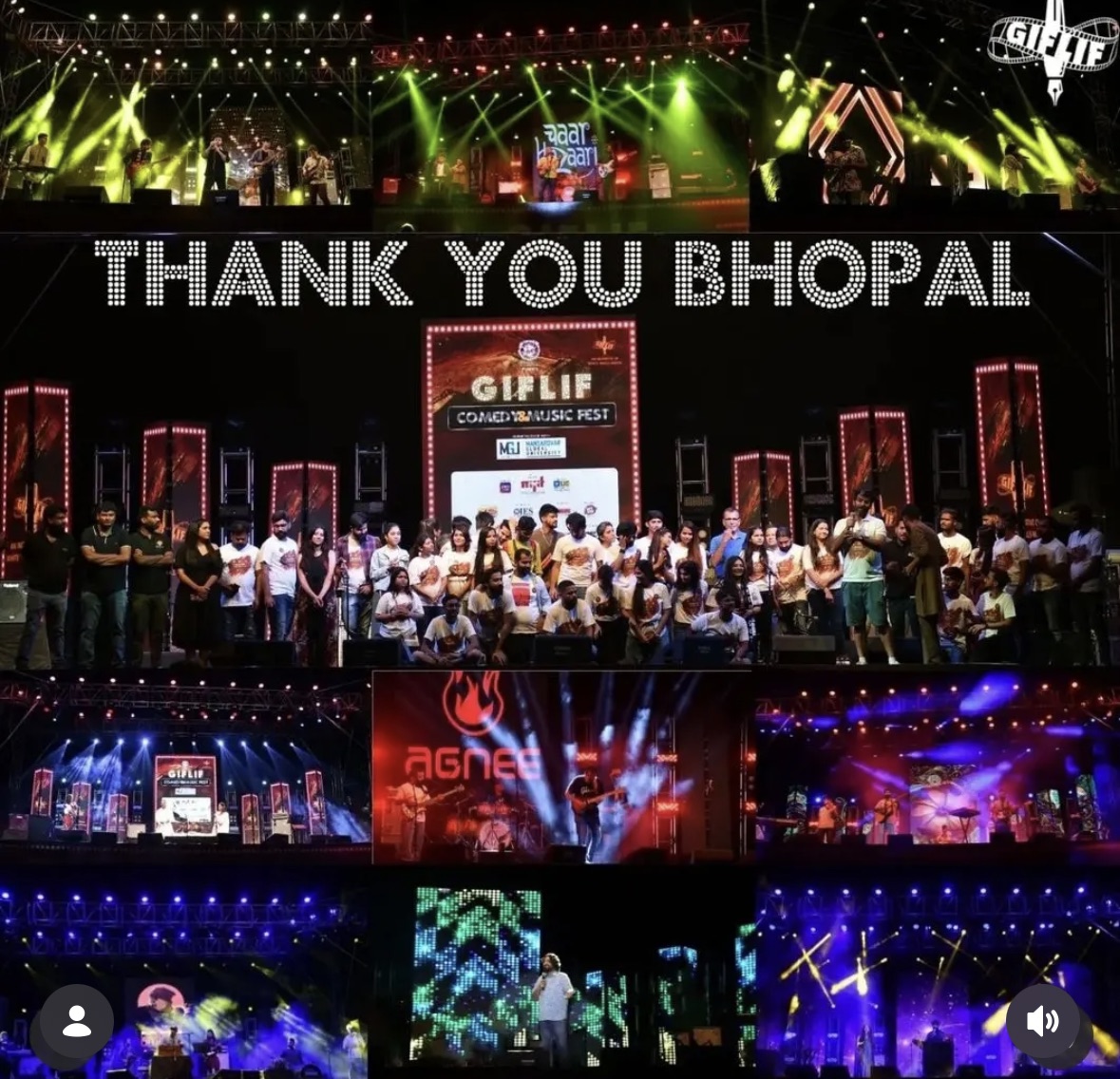
The large ones had a rhythm to them. A two-day festival, with roughly one month of concentrated preparation behind it.
One month to build the campaign. To write and pitch the sponsorship decks, from the first slide to the signature. To raise the funding. To run the physical marketing across the city and the paid campaigns online. To research independent music properly, listen to far more of it than we would ever book, and put together a lineup of six artists across two days that would hold an audience who had mostly never heard any of them.
At GIFLIF Indiestaan in Bhopal in 2023, that lineup was Lucky Ali, Thaikkudam Bridge, Anand Bhaskar Collective, Bombay Bandook, Kavish Seth Collective and The Western Ghats.
Then the ticketing, the vendors, the site, the experience on the ground. Eighty to a hundred people across crew, vendors and volunteers over the two days. A budget over one hundred thousand euros, with supplier negotiation, purchase orders and spend reporting sitting on me.
The part I liked most was the smallest part. Every day of that job involved putting music in front of people who had never heard it. Someone would walk in for one headline name and walk out having found a band they would follow for years. That is a very good feeling and I do not expect to find a job that reproduces it exactly.
Leela's
In 2022, alongside all of this, my family opened a restaurant in Bhopal.
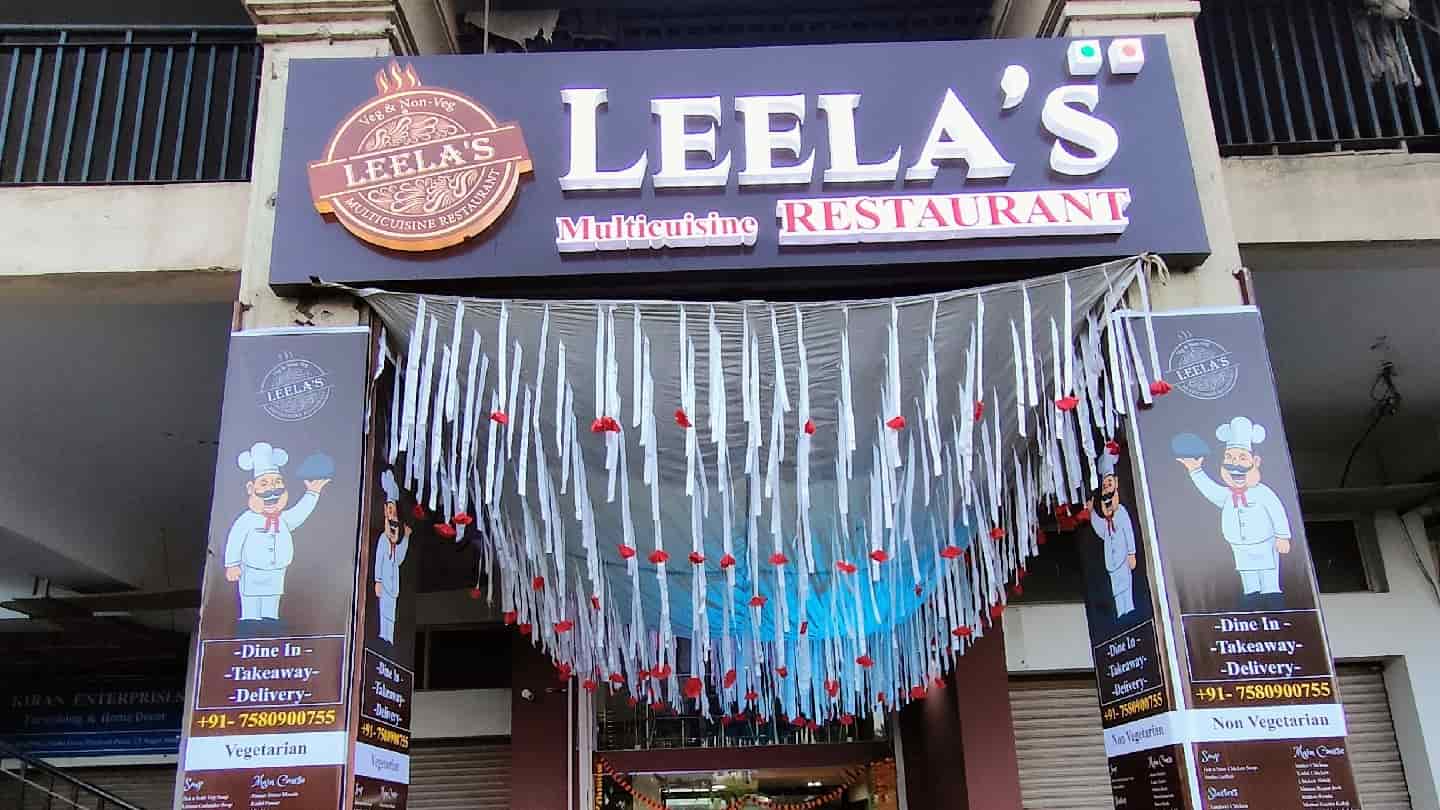
My father had been an executive chef at a restaurant that did not survive the pandemic. He had wanted a business of our own for a long time, and this was the moment. We built it from nothing. It is called Leela's Multi Cuisine Restaurant and he runs the kitchen there as an independent chef.
I helped where I could, after work and remotely, around a job that already ran long. It is not the reason I left, but it is part of what that period looked like: a full-time job in one city and a family business being built in another.
The arithmetic
Here is the part most people leave out of these posts, so I will put it in.
I left because of the numbers, and because the numbers were not changing.
Not because the work was bad. The work was the best I had done. But five years in, across three organisations, in three quite different corners of the industry, the line was flat. The salary was flat. The scope was flat. I could see the shape of the next ten years fairly clearly and there was very little slope in it.
That is a strange thing to leave a job over, because there is nothing to point at. Nobody wronged me. I was simply not satisfied, with the salary, with what the market was returning on the work, and with how long it was going to take to change.
Look at the public benchmarks and the picture is not encouraging. A marketing professional with three to five years of experience in India sits somewhere in the range of eight to fourteen lakh a year, and the higher end of that assumes a metro, a funded startup or a large consumer brand. Getting meaningfully past it usually means another five to eight years, or a title change that itself takes years to earn. The averages are not the problem. The gradient is.
Indian marketing is enormously competitive and it is deep in talent. That is exactly the problem when you are in the middle of it. Standing out takes years. Building a reputation that commands what you think you are worth takes years more. Every step is contested by very good people, and the compounding is slow. You can be excellent and still spend a decade waiting for the market to catch up with you.
I was not willing to spend that decade finding out.
Then there was the second calculation, the one nobody talks about, and it is what decided the timing.
A postgraduate degree in India is two years. Abroad it is one.
That is not a small difference when you are five years into a career and weighing what it costs to stop earning. Two years out is a serious bet. One year is a manageable one. Add the international exposure that nobody in my family had, and it stopped being a close call.
Why analytics
Deciding to leave and deciding what to study were two separate decisions, and the second one took longer.
After five years I could do a great deal. Build a brand, write the copy, shoot and cut the video, run the ads, pitch the sponsor, manage the budget, hold the room on the day. Marketing, communications, digital, events, operations.
What I could not do was connect any of it with evidence.
Every recommendation I made was an argument from instinct. Good instinct, built on five years of watching what worked, but instinct all the same. When a sponsor asked why a campaign was worth their money, I answered with conviction and case studies. When we chose one channel over another, we chose it because it had felt right last time. I could tell you what happened. I could not always tell you why, and I could not prove it.
Digital marketing was the obvious course to take. It would have taught me things I mostly already knew.
Business analytics was the useful one. Not a career change and not an escape from marketing, but the missing layer underneath everything I already did. The point was never to stop being a marketer. It was to become one who could show his work, and who was harder to replace for it.
February 2024
I decided in February 2024.
Nobody in my family had studied abroad. My brother Piyush was the one who kept insisting I could, and he pushed hard for Canada, where he had friends. I looked at it seriously, and it was not the right fit for me.
I put in my applications, had my admission by June, worked out my notice, and landed in Ireland on 24 August 2024.
How Ireland and Galway won out over everywhere else is a longer story, and it is the next post.
Was it the right call?
I am writing this in July 2026. I have finished the MSc. I spent a year and a half as a Graduate Teaching and Communications Assistant at the University of Galway and delivered over a hundred and sixty campus tours for students from more than twenty countries. I served as President and PRO of the Bharat India Society, University of Galway. I have travelled a good part of this country and built a following of nearly fourteen thousand people documenting it.
I am also still looking for the role I moved here for.
So the honest answer is that I do not know yet, and I would rather say that than sell you a triumph I have not finished earning. What I can say is that the line is not flat any more. Two years ago I could describe my next decade in a single sentence. I cannot do that now, and after five years of knowing exactly what was coming, that turns out to be the thing I wanted most.
If you are sitting in India right now doing work you are proud of, with nothing wrong and nothing moving, quietly calculating how many years it will take to be paid what you think you are worth, I cannot promise you this route works. I can tell you that the calculation is a legitimate one to make, and that "nothing is wrong" is not the same thing as "this is enough."